
How to Save Money With Electrical Panel Upgrades: Expert Guide
Table of Contents
- How to Save Money with Electrical Panel Upgrades in Altadena, California
- What to Know Before Starting Your Panel Upgrade
- Step 1: Evaluate Your Current Electrical Panel
- Step 2: Get a Professional Load Calculation and Free Estimate
- Step 3: Hire a Licensed Electrician and Pull Permits
- Step 4: Upgrade to 200-Amp Service
How to Save Money with Electrical Panel Upgrades in Altadena, California
Learning how to save money with electrical panel upgrades is essential for Altadena homeowners, as a current and up-to-code panel can reduce overall expenses in your home by improving insurance underwriting and helping avoid code violations. Our team of trusted local electricians assist Altadena and surrounding foothill neighborhoods with the financial aspects of a new panel via free estimates and clear, concise advice for what kind of upgrade meets California electrical code requirements. Unpermitted or unlicensed electrical work, on the other hand, can actually lead to more problems than saving any money.
Before you start any upgrades, you should know the local conditions that affect both safety and costs so that your investment is in line with your goals for the future.
Key Takeaways
- In order for work to begin on your home in Altadena, CA, a panel upgrade needs to be carefully prepared as you don’t want to have any delays or fines.
- Before scheduling a panel upgrade, inspect your existing electrical panel in your home.
- After evaluating your panel’s capacity in Step 1, the next critical step is a professional load calculation.
- When we get the permit, we can begin the upgrade.
- Once your 200-amp electrical panel upgrade has been permitted and inspected in Altadena, you can save money on the cost of the work by using rebates and incentives.
What to Know Before Starting Your Panel Upgrade
In order for work to begin on your home in Altadena, CA, a panel upgrade needs to be carefully prepared as you don’t want to have any delays or fines. Our licensed and insured team can help you properly follow the process as it’s laid out in the 2025 California Building Standards Code (Title 24).
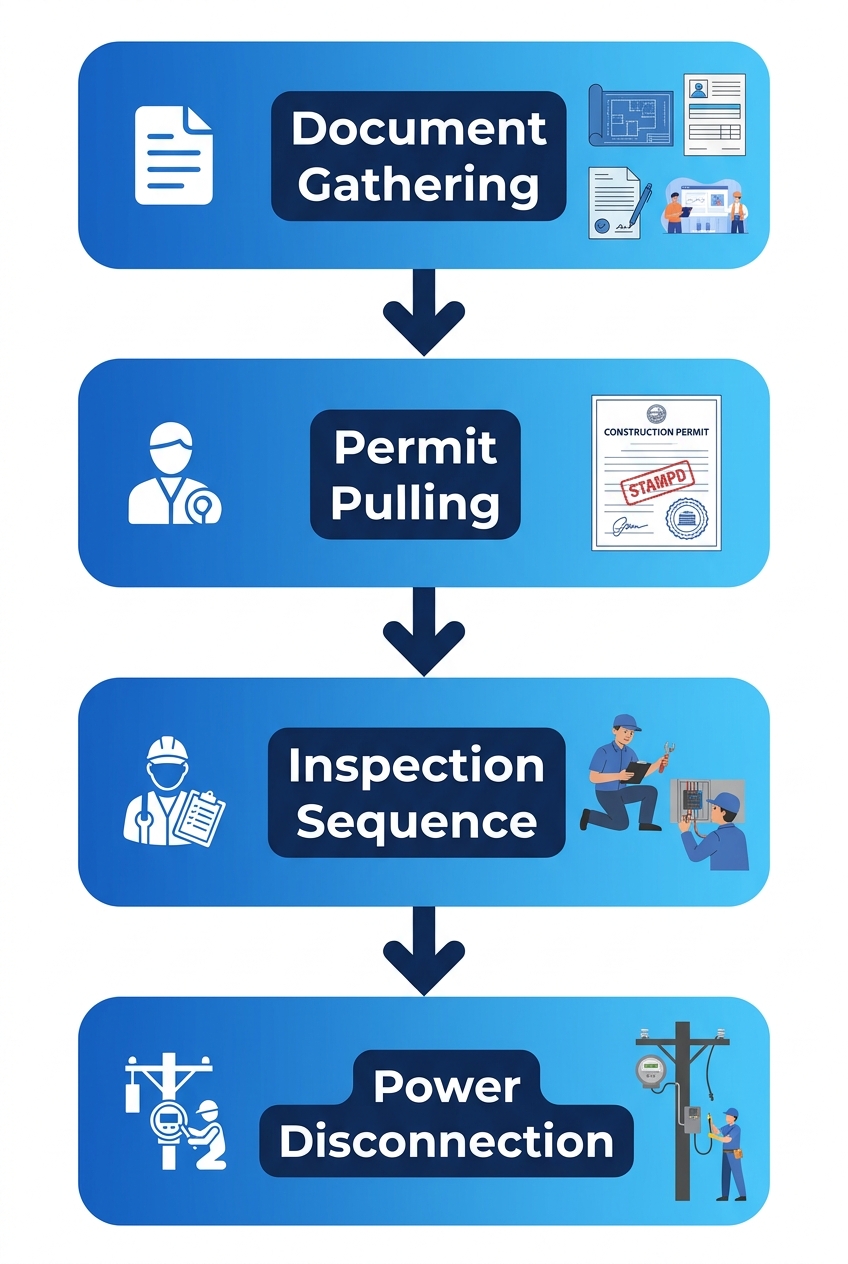
First off, you need permits and documentation. California requires an electrical permit for panel upgrades. It includes submitting load calculations, single-line diagrams, a site plan, and panel cut sheet to your local building department. Utility coordination is also required as your installer will have to work with PG&E or LADWP to turn off and then on your power.
Next, make sure your workspace is properly cleared and safe for working. According to the California Electrical Code, you need a 36 inch deep and 30 inch wide clear work opening in front of the panel, with at least 6 ft 6 inches of vertical clearance. Whole-house surge protection is required on all new or replaced residential service equipment, and modified circuits need to include upgraded AFCI and GFCI protection.
There’s also the risk of licensing. Homeowners can act as owner-builders, but unlicensed contractors face penalties up to $15,000. Check with your local building department to see what your panel allows before moving forward, and let us take care of the rest with code-compliant, professional service.
Step 1: Evaluate Your Current Electrical Panel
Before scheduling a panel upgrade, inspect your existing electrical panel in your home. Locate the panel label to identify the manufacturer and model—Federal Pacific Stab-Lok and Zinsco panels are widely flagged by insurers as uninsurable in more than 40 states, which can lead to policy denial or non-renewal.
Make sure you check the main breaker amperage. If your house is over 2,000 square feet and is still using a 100-amp service, underwriters may flag that as a risk factor. Also, keep an eye out for signs of wear, like scorch marks, buzzing sounds, or outdated parts. Verify whether any electrical work done previously was properly permitted—unpermitted installations can void your coverage entirely.
If you’ve added high-draw systems such as an EV charger that doesn’t have a calculated load, the insurer may see this as an overloaded system. Make sure you’re honest about your panel’s age, capacity, and condition in the application to avoid misrepresentation, which can lead to the loss of your insurance policy.
Step 2: Get a Professional Load Calculation and Free Estimate
After evaluating your panel’s capacity in Step 1, the next critical step is a professional load calculation. This process totals all existing and planned electrical loads—including EV chargers, new appliances, and future expansions—to determine whether your home needs a 100A or 200A service upgrade. Most Altadena homes upgrading from 100A to 200A capacity find this step essential for both safety and code compliance.
Under California’s 2025 Title 24 Building Standards Code, load calculations are required documentation for panel upgrade permits. Our licensed electricians provide this service at no cost, so you can move forward with confidence knowing your upgrade is sized correctly and meets local requirements. Understanding how to save money with electrical panel upgrades starts with accurate load sizing—let us help you plan your next steps.
Step 3: Hire a Licensed Electrician and Pull Permits
Once you have completed your load calculation and received your estimate in step 2, hire a licensed electrician to pull the necessary permit before beginning work. Per the 2025 California Building Standards Code (Title 24), electrical panel upgrades in Altadena require a permit and inspections in order to be compliant with safety and performance requirements.
Most homeowners benefit from hiring a licensed C-10 electrical contractor who can make the application, including load calculations, single-line diagrams, site plans, and panel cut sheets. While California does allow for owner builders to pull their own permits in certain declarations, that still requires working closely with the code and utilities.
In California, unlicensed contracting work can come with fines up to $15,000 plus possible criminal charges, so make sure you check for a license and insurance before you sign anything.
Step 4: Upgrading Your Panel to 200-Amp Service
When we get the permit, we can begin the upgrade. A standard residential service upgrade will increase the service capacity from 100-amp to 200-amp, bringing your home’s electrical system up to date with current technology. California’s Title 24 requires us to coordinate with your utility company to disconnect power temporarily while upgrading, to keep everyone safe and in compliance.
The licensed electricians we hire during this process will replace your panel and expand the service to increase capacity while making sure that all the modified circuits are AFCI and GFCI protected. Any existing circuits remain grandfathered unless they are altered. We are required to install whole house surge protection on any new or replaced service equipment, which is per state code. Work must also meet certain working space requirements, including 36 inches deep and 30 inches wide in front of panel for easy access and a minimum of 6 foot 6 inch height to allow safe access for future maintenance.
Step 5: Apply for Rebates and Incentives
Once your 200-amp electrical panel upgrade has been permitted and inspected in Altadena, you can save money on the cost of the work by using rebates and incentives. Saving money from an electrical panel upgrade isn’t limited to just getting the job done; you also need all the proper paperwork on hand.
Contact your local utility provider and city building department to double check that rebates and incentives are still available, as these programs and their eligibility criteria change all the time. Keep copies of your permit paperwork, load calculations, single-line diagrams, and panel cut sheets on file because you may be asked for them later to prove the project complies. Submit your application as soon as possible, follow-up to see if you have been approved and make sure you can meet the inspection or documentation deadlines imposed by the program.
Now that you’ve organized all these records, we’re ready to move on to step two, where we’ll focus on maintaining your upgraded system for long-term safety and efficiency.
Step 6: Document Your Upgrade for Your Insurer
Once you’ve acquired the rebates, your last step in safeguarding your investment is providing the documentation to your insurer. This paperwork will ensure the upgrade is recognized during underwriting or renewal, helping maintain or improve your coverage eligibility.
We recommend gathering these essential documents:
- Municipal permit and final inspection sign-off
- Completion paperwork from your licensed electrician
- Load calculation report (especially if adding an EV charger)
Notify your carrier as soon as the panel is upgraded and make sure you follow-up to ensure that they have reclassified your panel. Keep copies of any correspondence for when your policy gets reviewed at renewal time.
After the insurer has seen your upgraded panel, you’ll be set to enjoy the financial benefit over the life of the investment.
Step 7: Leverage Your Upgrade for Long-Term Savings
You’ll be able to use these upgrade records for your insurer to construct a long term financial case for why the work was needed. While an electrical panel upgrade does not promise dollars back when it comes time to sell your home, appraisers typically treat it as necessary maintenance, with value retention showing up as roughly 50–80% of project cost through a stabilized or higher sale price.
Replacing hazardous legacy panels (especially Federal Pacific Electric or Zinsco) can help prevent your home from being denied insurance, which can hold up a pending home sale. Going to a 200-amp panel will allow you to be prepared for EV chargers, solar arrays, high efficiency systems and more. By getting a permit for the upgrade, you are taking another step in your negotiation by removing inspection red flags.
The real payoff compounds over years of ownership. Keep your upgrade documentation current and think in years, not weeks, to maximize the financial benefits of your decision.
Solving Common Panel Upgrade Challenges
Upgrading an electrical panel in Altadena doesn’t have to stall your plans for modern conveniences. Saving money from a panel upgrade starts with avoiding permit rejections, failed inspections, and costly rework by addressing the most common hurdles up front.
Permits can stall upgrades before any work has even started due to Permit paperwork pitfalls. We provide all necessary load calculations, single line diagrams, site plans and panel cut sheets to meet Title 24 requirements and help avoid common rejection reasons such as missing diagrams or incorrect AIC ratings.
Working clearance gaps can require costly redesigns if not taken into account. California’s Title 24 requires 36 inches of depth and 30 inches of width in front of the panel with 6 feet 6 inches of vertical clearance – we make sure to measure and plan for these clearances at the design stage to avoid delays.
When it comes to capacity decisions, many homeowners are unsure whether 100 amps is enough or if 200 amps is the practical minimum. For most Altadena homes that want to add an EV charger, heat pump, or solar, we recommend starting at 200 amps as the code compliant starting point, in order to have the ability to support your future electrical needs without building too much for today’s needs.
Whole-house surge protection is required for all new or replaced residential service equipment, which makes now the perfect time for upgrading to add this necessary safety feature. Licensed electricians will coordinate with the utility company, arrange for inspections and make sure everything is code compliant while you enjoy the long term cost savings and reliability of the upgrade.
Frequently Asked Questions
Can an electrical panel upgrade improve my home’s energy efficiency and reduce monthly bills?
An electrical panel upgrade itself does not directly improve energy efficiency or reduce monthly bills. The upgrade ensures the system can safely support modern, high-efficiency appliances and EV chargers, which may help reduce long-term costs by enabling the use of energy-saving technologies.
How does an electrical panel upgrade help lower my home insurance premiums?
A documented 200-amp panel upgrade can lower home insurance premiums by 5-15% or prevent non-renewal, as insurers often classify hazardous legacy panels like Federal Pacific Stab-Lok and Zinsco as uninsurable. Upgrades must be permitted and completed by licensed professionals to qualify.
How does a modern electrical panel prevent costly emergency electrical repairs in the future?
A modern electrical panel reduces the risk of emergency repairs by ensuring the system meets current safety codes, including whole-house surge protection and proper AFCI/GFCI coverage. It also supports future electrical loads without overloading, minimizing the chance of failures.
Are there rebates or incentives available for electrical panel upgrades to help offset the cost?
Rebates and incentives may be available through local utility providers and city programs, such as those offered by Southern California Edison, LADWP, or Pasadena Water and Power. Eligibility varies by program and must be verified directly with the provider.
Does an electrical panel upgrade increase my home’s resale value enough to justify the investment?
An electrical panel upgrade typically recoups 50-80% of its cost through retained or stabilized sale price, as appraisers view it as necessary maintenance. It also removes inspection red flags and prevents insurance denials that could stall a home sale.
Start Saving with Your Altadena Panel Upgrade
Permitted and documented panel upgrades can be good for insurance underwriting, as many insurers consider old hazardous panels like Federal Pacific or Zinsco to be uninsurable, whereas a new 200-amp service can reduce rates or prevent a non-renewal. Insurers usually give you 30-90 days to finish required upgrades in order to maintain coverage.
Permitted upgrades remove red flags that can stall your home sale, and help keep your value. Replacement will recoup roughly 50-80% of its cost through stabilization or retained sale price, making a needed home repair into a smart financial decision. Our licensed team in Altadena makes sure all repairs meet code and have proper permits, so you can have lasting safety and savings without any surprises.
Contact our Altadena team now at (626) 768-1402 for a free estimate and begin protecting your home’s value and your family’s safety.
Brand names are used for identification only.
Get Your Free Panel Estimate
You now have a complete roadmap for saving money through an electrical panel upgrade, from accurate load calculations and proper permitting to documenting the upgrade for your insurer. Doing each step right the first time is what prevents costly failed inspections, fines, and rework down the line. Our licensed and insured team handles panel upgrades, permit paperwork, and utility coordination for homeowners in Altadena, California and the surrounding foothill communities. We start every project with a free estimate, so you know exactly where you stand before any work begins. Whether you have an aging Federal Pacific or Zinsco panel or simply need 200-amp capacity for an EV charger, we can guide you through the process. Call us at (626) 768-1402 to schedule your evaluation. Your home’s safety and long-term value are worth the call.