
Carbon Monoxide Detector Placement Guide: Essential Home Safety Tips
Table of Contents
Carbon Monoxide Detector Placement Guide for Altadena Homes
A carbon monoxide detector placement guide for Altadena houses begins with a rule that carbon monoxide alarms need to be installed outside of each bedroom on every habitable level in a home and should also be no less than 15 feet away from any fuel burning appliance. Section R311 of the California Building Standards Commission says that all dwelling units equipped with fuel fired heating systems and/or an attached garage need to include CO alarms outside bedrooms and on every level, including basements. As per NFPA 72, according to Descent analysis, alarms mustn’t be positioned closer than fifteen feet from furnaces or water heaters. Our licensed Altadena electricians can confirm your detectors meet these placement rules, ensuring code compliance and home safety. Another key point you want to consider when placing CO alarms is where they’re mounted. This could determine just how fast your CO alarm will respond to dangerous concentrations.
Key Takeaways
- People who own homes may wonder how high to mount carbon monoxide detectors in their rooms.
- Not only must you keep your detector away from fuel-burning appliances, but you must also avoid placing your unit near vents or windows.
- California Building Code Section R311 calls for carbon monoxide alarms in each livable area, including basements, but does not include crawl spaces nor unusable attic areas.
- Even if you have CO alarms at each level, position them near sleeping areas to make sure occupants are alerted.
- California law requires carbon monoxide detectors be installed in all dwelling units that contain a fuel-fired appliance or an attached garage.
1. Correct Mounting Height for CO Detectors
People who own homes may wonder how high to mount carbon monoxide detectors in their rooms. However, the main concern is location since carbon monoxide gets circulated equally throughout an indoor area because the gases diffuse freely due to natural air circulation that occurs in the building. This means there is no particular benefit when placing a gas detector higher up against a surface or lower down inside any space.
NFPA 72 requires CO detectors outside each separate sleeping area and on every occupiable level of a home, including basements. CO sensors typically last 5 to 10 years depending on the type, and we recommend checking the manufacturer’s expiration date to know when replacement is due. Homes with hollow-core interior doors may need additional detectors because these doors can reduce alarm sound transmission enough to prevent occupants from hearing an alert while sleeping.
We have professional local licensed and insured electrician that installs correct Hardwired CO Detectors into your home and give free estimate on whole installation in altadena. How far away you place your CO detector from a fuel-burning appliance can affect whether it will work properly.
2. Safe Distance from Fuel-Burning Appliances
Now that the correct mounting height is understood, the next consideration is how far away from other appliances the detector needs to be placed. According to Descent Analysis and NFPA 72, which is the national fire alarm code, at least one CO detector is required on each occupiable level and outside each sleeping area. At least 15 feet must be maintained between the detector and any appliance burning fossil fuels, like gas furnaces, water heaters and stoves. That space is needed because those devices often produce tiny, safe bursts of carbon monoxide when switching on; if a detector is installed closer than 15 feet, the little burst might be interpreted as a leak, causing a false alarm.
When a room’s footprint prevents achieving the full 15-foot clearance, we encourage homeowners to consult a licensed electrician who can evaluate the space, determine the safest viable placement, and ensure that the detector’s sensitivity and mounting comply with manufacturer guidelines and local building codes. Beyond appliance spacing, the detector’s location relative to vents and windows also matters for accurate readings.
3. Keep Detectors Away from Vents and Windows
Not only must you keep your detector away from fuel-burning appliances, but you must also avoid placing your unit near vents or windows. Airflow from the forced-air register, open windows, or doors can push carbon monoxide away from the detector sensor, causing a delay in alarm activation. Because carbon monoxide is evenly dispersed through all the air, drafts may carry carbon monoxide away from where the alarm can detect it. This can leave occupants without prompt warning.
We recommend mounting CO detectors on interior walls, at least several feet away from any vent, window, or exterior door. NFPA 72 standards emphasize detector locations that maximize detection reliability; avoiding drafty spots is consistent with that goal, as uniform mixing ensures that height is less critical than proximity to airflow sources.
The electrochemical sensor in a detector will only last for approximately 5-10 years. Keeping your unit free from vents and windows can help keep the equipment working well throughout its service life until that time.
Once you’ve selected places without drafts in them, make sure there is at least one detector on every level of your home.
4. Installing Detectors on Every Home Level
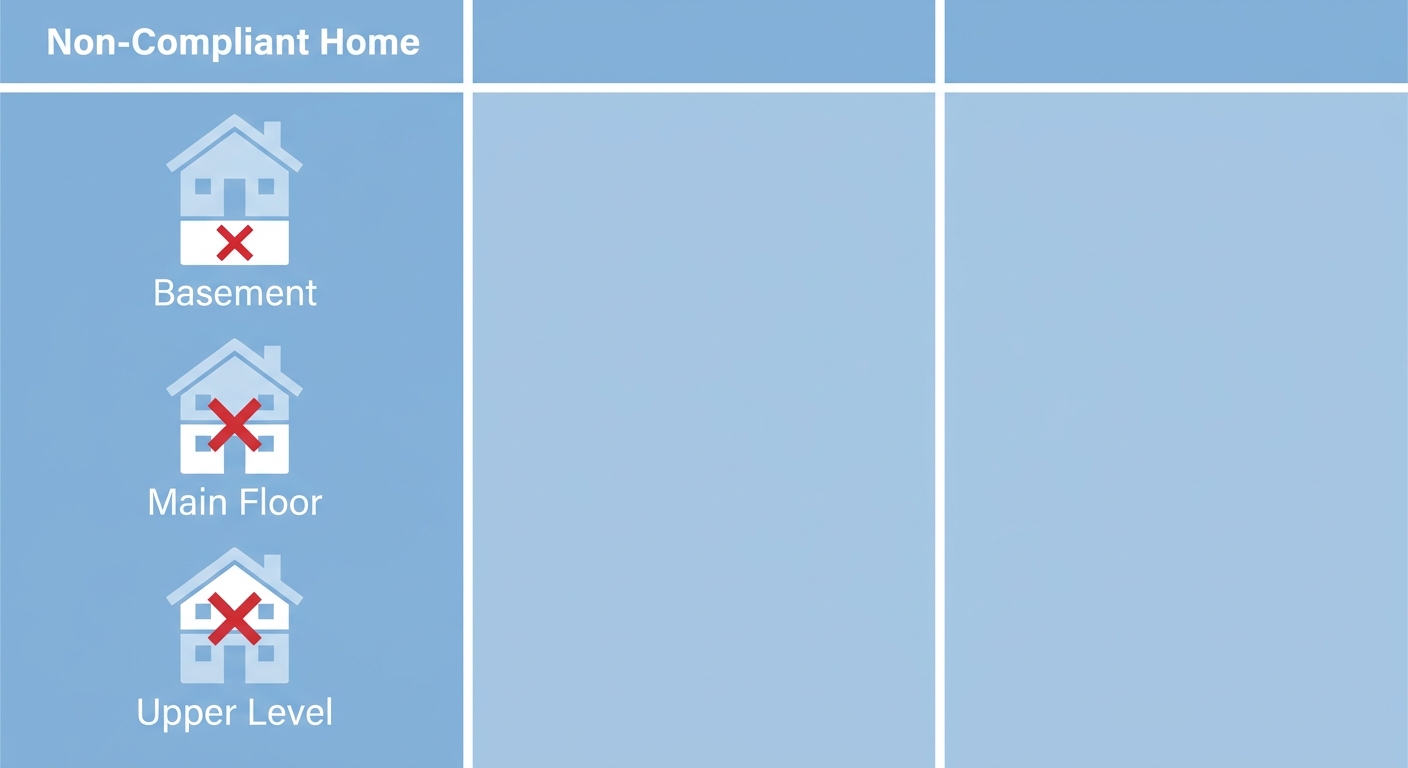
California Building Code Section R311 calls for carbon monoxide alarms in each livable area, including basements, but does not include crawl spaces nor unusable attic areas.
When trying to decide where to put them, first install one on each floor; the law states that you must have at least one in each separate sleeping area. In addition, if there is more than one, make sure they will go off when any one does because California requires alarms to be interconnected. Other places follow this rule as well. NYC, for instance, mandates an alarm on each level, plus inside the space 15 feet from the door to each bedroom to get complete coverage.
While there are sensors placed everywhere in your home, we’ll take a look at the bedrooms, since bedroom proximity is the location where early warning matters most for sleeping residents. We offer free estimates so we can see how your house is laid out to make sure that the detectors are properly located as per local codes.
5. Optimal Placement in and Near Bedrooms
Even if you have CO alarms at each level, position them near sleeping areas to make sure occupants are alerted.
Carbon monoxide alarms must be installed outside each separate sleeping area, within 15 feet of any door that leads to a sleeping room.
In homes containing fuel-fired appliances or an attached garage, regulations from the California Building Standards Commission require CO alarms both outside sleeping areas and on every occupiable level of the dwelling, including basements.
All such devices must be listed under UL 2034 standards or, for combination smoke and CO units, must also comply with UL 217. In addition, California requires that they meet approvals from its Office of the State Fire Marshal.
To get max protection, every alarm should be linked so when one device activates they all go off throughout your house.
Manufacturer guidelines may impose additional location restrictions beyond code minimums.
These rules are intended to ensure that placements are done correctly and safely. The California code has its own set of approvals and connection standards, which we’ll go over shortly.
6. Following California CO Alarm Codes
California law requires carbon monoxide detectors be installed in all dwelling units that contain a fuel-fired appliance or an attached garage. The mandate includes new construction and existing homes undergoing alterations or additions.
Alarms must be put up outside each separate sleeping area and on every occupiable level of the house, including basements. Knowing these rules will assist you ensure that Altadena carbon monoxide detector placement regulations are being met.
All alarm systems must be listed to UL 2034; combination units must also comply with UL 217. All systems must be approved by the California State Fire Marshal. When multiple alarms are required, they must be interconnected so that activation of one triggers all. Hardwire systems shall draw power from the main building circuitry, with batteries provided to keep operation going during any possible outage period.
In Altadena, as licensed electricians, we’ll take care of all of your interconnecting CO detector requirements at each location according to this state legislation and you can receive a free estimate on any project. When space for the device has been made as well as everything else is according to codes, location matters. An alarm placed in dead air or behind something will not notify occupants when carbon monoxide is present.
7. Avoiding Dead Air Spaces and Obstructions
These dead air spaces and obstructions may render a CO detector placed correctly useless if it does take too long to sound when exposed to harmful CO levels, says a report on NFPA 72. According to that document, any CO detector must be kept at least 15 feet from fuel-burning appliances such as furnaces and water heaters to avoid nuisance alarms from startup emissions. Carbon monoxide mixes evenly with room air, so placement isn’t nearly as significant a concern as whether there’s something obstructing the flow of air.
Hollow-core doors can reduce alarms by approximately 15 to 20 dBA as compared to open doorway sound pressure levels. Sound should be measured at the bedside. If sounds are barely audible, place one detector within the room at the bedside level, which meets the 75 dBA pillow-level sound pressure requirement. Do NOT install detectors behind large furniture, heavy curtains, or in corners where stagnant air slows response.
The blind spot will go away if you put them in the right place, and a routine test once a month makes sure they work well.
8. Regular Testing and Upkeep for Reliability
While correct installation is necessary, routine testing and maintenance are what keep these detectors reliable for years. Every month, press and hold the test key on the carbon monoxide detector until you hear a loud beep. If the sound is weak or absent, replace the unit right away.
Battery maintenance is equally important. Install fresh batteries at least once a year or as soon as the low-battery chirp begins, and avoid rechargeable batteries, which may not deliver consistent power. Consistent CO alarm upkeep also means watching the sensor lifespan. According to an industry analysis from Descent Analysis, electrochemical sensors typically last five to ten years, after which the entire detector should be replaced, regardless of battery condition.
Please refer to your equipment manufacturer for instructions on how to perform this test. If problems occur while performing these tests or if you wish to have an overall inspection of the house electrical system, our licensed professionals are here to help protect your home and family.
Frequently Asked Questions
How far should a carbon monoxide detector be from my furnace or gas appliances?
A carbon monoxide detector should be placed at least 15 feet from a furnace or any fuel-burning appliance. This distance prevents nuisance alarms caused by small, safe bursts of carbon monoxide that occur when appliances start; installing too close can trigger false alerts.
Should a carbon monoxide detector be mounted high on the wall or near the floor?
Carbon monoxide detectors do not need to be mounted high or low because the gas mixes evenly with air throughout a room. Follow manufacturer guidelines; if you have a combination smoke and carbon monoxide unit, it must be ceiling-mounted to satisfy smoke detection requirements.
Why should I avoid placing carbon monoxide detectors near vents or windows?
Placing detectors near vents or windows can delay the alarm because drafts from forced-air registers, open windows, or exterior doors may push carbon monoxide away from the sensor. Mount detectors on interior walls at least several feet from any vent or window to ensure prompt detection.
Do I Need to Place Carbon Monoxide Detectors on Every Level of my House?
Yes, carbon monoxide detectors must be installed on every occupiable level of your house, including basements. California Building Code Section R311 and NFPA 72 require this to provide early warning throughout the dwelling. Crawl spaces and uninhabitable attics are excluded.
Where is the Best Place to Install a Carbon Monoxide Detector in my Home?
The best place to install a carbon monoxide detector is outside each separate sleeping area, within 15 feet of bedroom doors, and on every occupiable level of the home. Keep the unit at least 15 feet from fuel-burning appliances, away from vents and windows, and out of dead air spaces.
Safeguard Your Home with Professional Electrical Support
Beyond regular testing and upkeep, professional installation is critical to ensure your carbon monoxide detectors perform when it matters most. As the National Fire Protection Association advises, CO sensor cells typically last only 5 to 10 years. We follow California Residential Code R311 and NFPA 72 standards for placement, interconnection, and hardwired power with battery backup, providing code-compliant installations that protect your Altadena home. For a comprehensive carbon monoxide detector placement guide in Altadena, rely on our team for free estimates and proper placement away from fuel-burning appliances and near every sleeping area. We recommend hiring a licensed electrician and obtaining necessary permits for electrical work. Trademarks cited on this website are the property of their respective owners; brand names used for identification only.
Schedule Your Free Electrical Estimate
Now that you’ve learned the essential placement rules for carbon monoxide detectors, you can see how critical proper installation is for protecting your Altadena home. From maintaining safe distances from fuel-burning appliances to avoiding dead air spaces, each guideline works together to keep your family safe. To fully comply with California building codes and NFPA 72 standards, a licensed electrician can verify your detectors are in the right locations and hardwired correctly. Altadena Pro Electrician Service provides free estimates for CO detector installation and whole-home electrical safety inspections. Our team understands the specific requirements for homes in Altadena and surrounding foothill communities. With sensors lasting 5 to 10 years, a professional inspection ensures your system stays reliable for the long term. Contact us today to schedule your estimate and take the next step in home safety.
Schedule Your Free Electrical Estimate